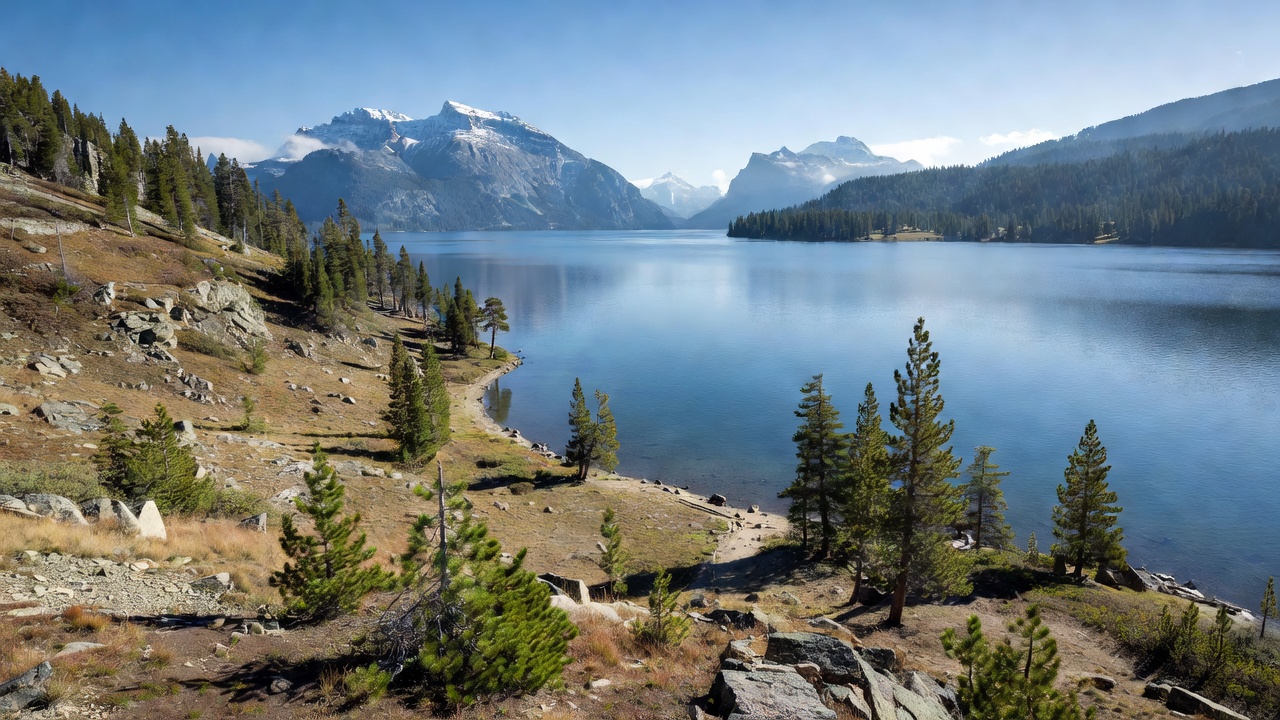
A panorama is a position
In a photograph, a lake-facing room can seem almost afloat. On a map, the same building may sit several switchbacks above the shore. Elevation can improve the breadth of a view and reduce some interruptions, but it also changes how you use the landscape. A morning swim, a bakery visit and a spontaneous ferry journey become different propositions when each begins with a steep descent.
Ask for the approximate location before committing to a stay, and request the precise access instructions when appropriate. Compare the road route with the pedestrian route: they are not necessarily interchangeable. A staircase may shorten the distance without making the journey suitable for a pushchair, a heavy suitcase or someone who needs step-free access.
Read the shape of the lake
Long, narrow basins draw the eye along a valley; broad water opens a more expansive horizon. Lake Como illustrates how steep slopes and branching shorelines can create sharply different outlooks over relatively short distances. At Lake Lucerne, the sequence of bays and surrounding mountains means that “lake view” alone tells you little about the precise composition from a room.
Lake Bled offers another useful lesson: a celebrated landmark can define a photograph, yet your day-to-day experience also depends on the roads, footpaths and public places surrounding the viewpoint. These places are geographical examples, not recommendations for named properties. Use their official destination maps to practise reading terrain rather than assuming that every accommodation shares the postcard perspective.
Trace the light across the room
Compass direction matters, but the mountain horizon matters too. An east-facing window may receive early light only after the sun clears a ridge. A south-facing terrace can be welcoming in a cool season while needing effective shade in summer. West-facing glazing can give a room a memorable evening atmosphere and a substantial late-afternoon heat load.
Ask which part of the day the main living space receives direct sunshine, and whether the answer changes significantly by season. Look for overhangs, external blinds, mature trees and shaded terrace areas in ordinary photographs. A bright room is not automatically an overheated room, but the design needs to show how it moderates exposure.
Separate a view from a right of access
Seeing water does not establish a legal or practical route to it. The nearest shoreline might be private, rocky, protected or reached only by a busy road. A jetty in the foreground could belong to someone else. Confirm whether advertised access is exclusive, shared or public, and whether it remains usable when water levels or local operating arrangements change.
At Lake Annecy, official visitor information is a useful starting point for understanding public beaches and lakeside movement. Around Lake Bohinj, the wider context of Triglav National Park makes local conservation guidance especially important. Do not infer swimming permission, parking permission or unrestricted shore access from an accommodation photograph.
Look back towards the villa
A view works in both directions. Boats, lakeside paths, neighbouring balconies and a higher road may overlook glazing that appears secluded in a carefully framed image. Request an exterior photograph showing the main windows from the nearest public approach. Ask whether foliage provides year-round screening or only seasonal cover.
Listen to the setting as well as looking at it. A quiet-looking basin may carry road noise, ferry sounds or activity from a bathing area. Ask a specific question about bedrooms at the hours you expect to sleep. “Peaceful location” is a broad description; distance from the road and the presence of opening bedroom windows are more actionable details.
Make an arrival map, not just a mood board
Before shortlisting, write down the journey from the final transport stop to the front door. Include the last uphill stretch, parking arrangement, steps and the route to everyday food. At Lake Garda, a lakeside road journey and a ferry crossing may offer very different practical options, depending on season and destination. Check current schedules rather than relying on a route shown in an old travel article.
A useful setting is one that supports your intended rhythm. If you plan to read indoors and cook most evenings, height and seclusion may be welcome. If you want daily swims and car-free dinners, an easier connection to the shore may matter more than another degree of panorama. Neither choice is more luxurious in the abstract; suitability is the more revealing measure.
Sources for your next check
- Lucerne Tourism — regional geography and visitor information.
- Bled Tourist Board — destination context and local movement.
- Lake Annecy Tourist Office — shoreline activities and visitor guidance.
- Triglav National Park — protected-area information.
- Visit Garda — regional planning information.